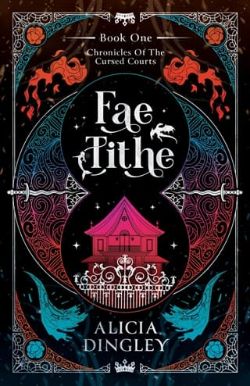
Alicia Dingley's "Fae Tithe" is a captivating foray into the realm of fantasy, where the boundaries between land and sea, human and fae, are not just blurred but intricately woven into a tapestry of intrigue and emotion. This novel, set in the enchanting yet perilous world of Seelieland, is a testament to Dingley's prowess in crafting a narrative that is both imaginative and deeply resonant with universal themes of love, sacrifice, and rebellion against oppressive systems.
The story centers around sixteen-year-old Eleanor Neycur, whose life is upended when the Seelie Court revives its ancient Tithe, claiming her as their own. Eleanor's journey from a hopeful young woman with dreams of the sea to a captive in a world of glittering servitude is a poignant exploration of identity and autonomy. Dingley skillfully portrays Eleanor's transformation, capturing her resilience and determination to reclaim her freedom. The character development here is profound, as Eleanor evolves from a passive participant in her own life to a formidable force challenging the very foundations of Seelieland's power.
Parallel to Eleanor's journey is that of her mother, Helena Neycur, whose fierce love and protective instincts drive her to confront the fae kingdom. Helena's character is a powerful embodiment of maternal strength and defiance. Her alliance with Lance, the merman bound by the laws of the sea, adds a layer of complexity to the narrative. Lance's vow to Eleanor, despite the risks of inciting war between land and sea, highlights themes of loyalty and the lengths one will go to for love. The dynamic between Helena and Lance is beautifully rendered, offering a compelling subplot that enriches the main storyline.
Dingley's writing style is both lyrical and precise, evoking the ethereal beauty and underlying menace of Seelieland. Her descriptive prowess brings to life the vibrant yet dangerous world of the fae, immersing readers in a setting that is as enchanting as it is treacherous. The author's ability to balance detailed world-building with the emotional depth of her characters is reminiscent of works by authors like Holly Black and Sarah J. Maas, who similarly excel in creating immersive fantasy worlds populated by complex, relatable characters.
The major themes of "Fae Tithe" resonate deeply, particularly the exploration of power dynamics and the struggle for freedom. The fae's control over humans through the Tithe serves as a metaphor for broader societal issues, prompting readers to reflect on the nature of authority and the fight against subjugation. Eleanor and Helena's rebellion against the Seelie Court is not just a personal battle but a larger commentary on resistance and the courage to challenge unjust systems. This thematic depth elevates the novel beyond a simple fantasy tale, offering readers a narrative that is both entertaining and thought-provoking.
Emotionally, "Fae Tithe" delivers a powerful impact. Dingley deftly captures the anguish and determination of her characters, drawing readers into their struggles and triumphs. The bond between Eleanor and Helena is particularly moving, showcasing the unbreakable ties of family and the lengths one will go to protect loved ones. The emotional stakes are high, and Dingley ensures that readers are invested in the outcome, creating a narrative that is as heart-wrenching as it is exhilarating.
In conclusion, "Fae Tithe" by Alicia Dingley is a masterful addition to the fantasy genre, offering a rich tapestry of themes, character development, and emotional depth. Its exploration of power, identity, and resistance against oppression is both timely and timeless, resonating with readers who appreciate narratives that challenge and inspire. Dingley's skillful storytelling and vivid world-building make "Fae Tithe" a must-read for fans of fantasy literature, promising an unforgettable journey through the enchanting yet perilous world of Seelieland.



