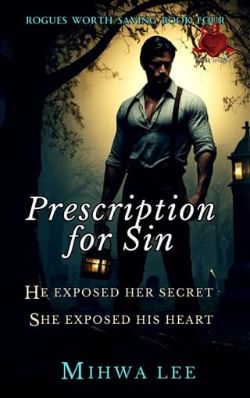
"Prescription for Sin" by Mihwa Lee is a delightful foray into the romantic comedy genre, blending elements of suspense, humor, and romance in a way that is both refreshing and engaging. The novel opens with a scene that immediately sets the tone for the rest of the story: a no-nonsense nurse, Emma Brown, stumbles upon a naked man tied to a tree in a moonlit cemetery. This intriguing premise hooks the reader from the start, promising a tale filled with unexpected twists and turns.
Emma Brown is a standout character, embodying a neurodiverse heroine whose sharp wit and medical expertise make her both relatable and admirable. Her character development throughout the novel is handled with care and precision, as she navigates the complexities of her emotions and the unfolding mystery surrounding Everett Hughes, the enigmatic stranger she rescues. Emma's journey is one of self-discovery, as she learns to balance her professional instincts with her personal desires, all while maintaining her independence and strength.
Everett Hughes, on the other hand, is a charming yet mysterious figure whose predicament adds layers of intrigue to the narrative. His character is a perfect foil to Emma's, creating a dynamic interplay that is both entertaining and thought-provoking. As the story progresses, Everett's secrets and vulnerabilities are gradually unveiled, adding depth to his character and enhancing the romantic tension between him and Emma. The chemistry between the two protagonists is palpable, driving the narrative forward with a blend of humor and heartfelt emotion.
Mihwa Lee's writing style is both witty and engaging, with a keen eye for detail that brings the story to life. Her use of humor is particularly noteworthy, as it is seamlessly woven into the fabric of the narrative, providing levity even in the most tense situations. The dialogue is sharp and clever, capturing the essence of the characters and their relationships with one another. Lee's ability to balance humor with more serious themes, such as the medical conspiracy and the characters' personal struggles, is a testament to her skill as a storyteller.
The major themes of "Prescription for Sin" are explored with nuance and depth, particularly the idea of forced proximity and the marriage of convenience trope. These elements are used to great effect, creating a sense of urgency and intimacy that heightens the stakes for Emma and Everett. The novel also delves into themes of trust, identity, and the power of love to overcome adversity, all of which are handled with sensitivity and insight.
In terms of emotional impact, "Prescription for Sin" delivers on multiple levels. The romantic tension between Emma and Everett is expertly crafted, keeping readers invested in their journey from enemies to lovers. The emotional stakes are high, as both characters must confront their pasts and make difficult choices in order to secure their future together. The novel's conclusion is both satisfying and heartwarming, leaving readers with a sense of hope and fulfillment.
Comparatively, "Prescription for Sin" shares similarities with works by authors such as Julia Quinn and Tessa Dare, who are known for their ability to blend romance and humor with historical or contemporary settings. Like these authors, Mihwa Lee excels at creating memorable characters and engaging narratives that resonate with readers long after the final page is turned.
Overall, "Prescription for Sin" is a captivating and well-crafted novel that will appeal to fans of romantic comedies and those looking for a story that combines humor, romance, and a touch of mystery. Mihwa Lee has crafted a tale that is both entertaining and thought-provoking, with characters that are as endearing as they are complex. This book is a testament to the power of love and laughter to heal even the deepest wounds, making it a must-read for anyone seeking a delightful escape into the world of romance and intrigue.



