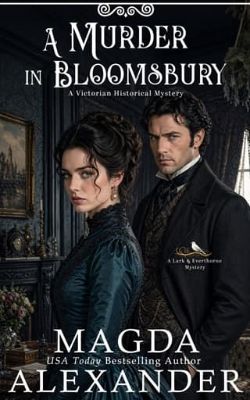
Magda Alexander's A Murder in Bloomsbury is a captivating entry into the Victorian historical mystery genre, weaving a tale of intrigue, societal critique, and personal redemption. Set against the backdrop of 1859 London, the novel introduces readers to a world where the veneer of respectability often conceals dark secrets. The story's central mystery—a poet's murder following a provocative reading—serves as the catalyst for an exploration of themes such as institutional corruption, the power of reputation, and the complexities of human relationships.
At the heart of the narrative is Lady Larkspur Everly, a character whose sharp intellect and fearless nature make her a compelling protagonist. Her Bloomsbury salon, a gathering place for radical thinkers and social outcasts, reflects her progressive views and sets the stage for the unfolding drama. Lark's determination to uncover the truth behind the poet's death is driven not only by a sense of justice but also by a personal connection to the victim and the potential threat to her own family. Her character is richly developed, with Alexander skillfully balancing her public persona as a formidable hostess with her private vulnerabilities, particularly her protective instincts toward her deaf younger sister.
Complementing Lark is the enigmatic Marquis of Everthorne, a man whose past is as scarred as his present. Known as the Devil of Everthorne, he is a figure shrouded in mystery and burdened by a family secret that ties him to the murder investigation. His alliance with Lark is both strategic and personal, as they navigate the treacherous waters of Victorian society. The dynamic between Lark and Everthorne is one of the novel's highlights, characterized by a slow-burn romance that adds emotional depth without overshadowing the central mystery. Their partnership is reminiscent of other iconic literary duos, such as Sherlock Holmes and Irene Adler, where mutual respect and intellectual parity drive the narrative forward.
Alexander's writing style is both evocative and immersive, capturing the essence of Victorian London with meticulous attention to detail. Her prose is rich and descriptive, painting vivid images of the city's bustling streets and opulent drawing rooms. This atmospheric quality enhances the story's suspense, drawing readers into a world where danger lurks beneath the surface of polite society. The author's ability to blend historical accuracy with fictional intrigue is reminiscent of the works of Anne Perry and C.S. Harris, who similarly excel in crafting historical mysteries that resonate with contemporary themes.
The emotional impact of A Murder in Bloomsbury is profound, as Alexander delves into the personal stakes for her characters. Lark's unwavering commitment to protecting her sister and seeking justice for the poet is both inspiring and heart-wrenching. The novel explores the cost of truth in a society that often values reputation over integrity, a theme that resonates with modern readers. As Lark and Everthorne peel back the layers of deception, they confront not only external threats but also their own internal struggles, making their journey as much about self-discovery as it is about solving a murder.
In terms of character development, Alexander excels in creating multidimensional figures who defy easy categorization. Lark is a woman ahead of her time, challenging societal norms with her intelligence and independence. Her interactions with Everthorne reveal a complexity that goes beyond the typical romantic subplot, as both characters grapple with their pasts and the societal expectations placed upon them. The supporting cast, including the various members of Lark's salon, adds depth to the narrative, each character contributing to the rich tapestry of Victorian life.
Overall, A Murder in Bloomsbury is a masterful blend of mystery, romance, and historical fiction. Magda Alexander has crafted a story that is both entertaining and thought-provoking, inviting readers to reflect on the enduring power of secrets and the courage required to confront them. The novel's intricate plot, well-drawn characters, and atmospheric setting make it a standout in the genre, appealing to fans of historical mysteries and those who appreciate a strong female protagonist. As the first book in the Lark & Everthorne Mysteries series, it sets a high bar for future installments, leaving readers eager for more of Lark and Everthorne's adventures.



