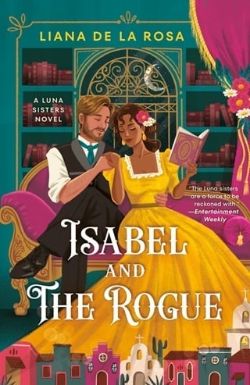
Liana De la Rosa's "Isabel and the Rogue" is a captivating historical romance that deftly intertwines themes of espionage, societal defiance, and the complexities of love against the backdrop of Victorian England. The novel is a delightful blend of romance and intrigue, offering readers a rich tapestry of historical detail and emotional depth. Set during a tumultuous period marked by the French Occupation of Mexico, the story follows the journey of Isabel Luna Valdés, a Mexican heiress who defies societal norms to protect her homeland.
Isabel is a compelling protagonist, characterized by her intelligence, determination, and a sense of duty that transcends personal desires. As the "forgotten" Luna sister, she is often underestimated by those around her, a fact she uses to her advantage. Her role as a covert agent, gathering intelligence from the British elite, is a refreshing twist on the typical wallflower narrative. Isabel's character development is a highlight of the novel, as she evolves from a seemingly passive debutante into a formidable force, driven by her love for her country and her growing sense of self-worth.
Opposite Isabel is Captain Sirius Dawson, a rakish yet charming British war hero with a penchant for seduction and subterfuge. Sirius is a complex character whose initial portrayal as a typical rogue is gradually peeled back to reveal layers of vulnerability and honor. His interactions with Isabel are charged with tension and wit, creating a dynamic that is both entertaining and emotionally resonant. Their mutual attraction is palpable, and De la Rosa skillfully navigates their evolving relationship, balancing moments of genuine connection with the inherent risks of their respective missions.
The writing style of Liana De la Rosa is both elegant and engaging, capturing the essence of the Victorian era while maintaining a modern sensibility that appeals to contemporary readers. Her prose is rich with descriptive detail, bringing to life the opulent ballrooms and shadowy corners of London society. The dialogue is sharp and often laced with humor, reflecting the intelligence and wit of her characters. De la Rosa's ability to weave historical context into the narrative without overwhelming the reader is commendable, providing a backdrop that enhances rather than detracts from the central romance.
The major themes of "Isabel and the Rogue" revolve around identity, loyalty, and the courage to defy societal expectations. Isabel's journey is one of self-discovery, as she navigates the constraints of her gender and social standing to assert her agency. Her determination to aid Mexico, despite the personal risks involved, underscores the theme of loyalty—not just to one's country, but to one's principles and loved ones. Similarly, Sirius's transformation from a self-serving agent to a man willing to risk everything for Isabel highlights the redemptive power of love and trust.
Emotionally, the novel is a rollercoaster, offering moments of heart-pounding suspense and tender intimacy. De la Rosa excels at creating scenes that resonate with readers, whether through the thrill of a clandestine meeting or the quiet vulnerability of a shared confession. The emotional stakes are high, and the author does not shy away from exploring the complexities of love in a world fraught with danger and deception. This emotional depth sets "Isabel and the Rogue" apart from more formulaic romances, inviting readers to invest in the characters' journeys and root for their eventual happiness.
In comparison to other works in the historical romance genre, "Isabel and the Rogue" stands out for its unique setting and the cultural nuances it brings to the narrative. While it shares thematic similarities with novels by authors like Julia Quinn and Tessa Dare, De la Rosa's focus on Mexican history and her heroine's dual identity add a refreshing layer of complexity. This cultural richness not only enhances the plot but also provides a broader perspective on the historical period, making the novel both entertaining and educational.
Overall, "Isabel and the Rogue" by Liana De la Rosa is a standout addition to the historical romance genre. Its blend of romance, intrigue, and historical detail offers a satisfying read for fans of the genre and newcomers alike. The novel's exploration of themes such as identity, loyalty, and love is both thought-provoking and emotionally engaging, ensuring that readers will be captivated from beginning to end. De la Rosa's skillful storytelling and well-drawn characters make this a must-read for anyone seeking a romance that is as intellectually stimulating as it is emotionally fulfilling.



