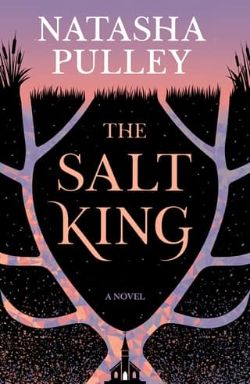
Natasha Pulley's novel, The Salt King, is a fascinating exploration of belief, mythology, and the apocalypse, set against the backdrop of an isolated salt mining town in England. This book weaves a complex narrative that combines the suspenseful elements of an end-of-the-world scenario with the intricate dynamics of faith and personal redemption. Pulley, known for her unique blend of historical fiction and speculative elements, delivers a story that is both thought-provoking and emotionally resonant.
The protagonist, Jesuit priest Avelyn Brocken, is a compelling character whose journey is central to the novel's thematic core. Born into a mining family in Hreodwater, Avelyn's life is shaped by the oppressive mythology of the Salt King, a deity revered by the townsfolk. His escape from the town and subsequent abandonment of his faith set the stage for a profound exploration of belief and doubt. Pulley skillfully portrays Avelyn's internal conflict, making his struggle with faith both relatable and deeply moving.
When Avelyn is tasked by the Vatican to investigate the mysterious events in Hreodwater, the narrative takes on a thrilling dimension. The transformation of a fellow priest into salt after a miraculous healing is a chilling introduction to the novel's apocalyptic elements. Pulley deftly balances these supernatural occurrences with the personal stakes of Avelyn's journey, creating a narrative that is as much about the end of the world as it is about personal salvation.
The character of Jericho, the town's gentle doctor, adds depth to the story. His partnership with Avelyn is not only crucial to the plot but also enriches the novel's exploration of queer romance. Pulley handles their relationship with sensitivity and nuance, providing a refreshing take on LGBTQ+ themes within the context of a genre that often overlooks such narratives. The chemistry between Avelyn and Jericho is palpable, adding an emotional layer that enhances the novel's impact.
Pulley's writing style in The Salt King is both lyrical and precise, capturing the eerie atmosphere of Hreodwater and the broader apocalyptic landscape. Her prose is imbued with a sense of foreboding that permeates the novel, drawing readers into a world where the boundaries between myth and reality blur. The vivid descriptions of the salt mines and the haunting imagery of the salt light contribute to the novel's immersive quality, making it a captivating read from start to finish.
Thematically, The Salt King delves into the power of myth and the ways in which belief systems shape human behavior. Pulley examines how myths can both bind communities together and drive individuals to the brink of destruction. The novel's exploration of faith is nuanced, acknowledging the comfort it can provide while also critiquing its potential to blind followers to reality. In this way, Pulley's work echoes the thematic concerns of authors like Margaret Atwood and Neil Gaiman, who similarly explore the intersection of myth and reality in their works.
Moreover, the apocalyptic elements of the story are reminiscent of Justin Cronin's The Passage, with its gripping depiction of a world on the brink of collapse. However, Pulley's novel distinguishes itself through its focus on personal redemption and the intimate relationships between characters. The global scale of the salt light's devastation is juxtaposed with the deeply personal stakes of Avelyn's journey, creating a narrative that is both epic and intimate.
Emotionally, The Salt King is a powerful exploration of loss, redemption, and the search for meaning in a world teetering on the edge of annihilation. Pulley captures the desperation and hope of her characters with a deft touch, making their struggles resonate with readers. The novel's conclusion, while avoiding spoilers, offers a satisfying resolution that underscores the enduring power of faith and love in the face of overwhelming odds.
In conclusion, Natasha Pulley's The Salt King is a masterful blend of apocalyptic fiction, mythological exploration, and queer romance. With its richly drawn characters, evocative prose, and thought-provoking themes, the novel is a standout addition to the genre. Pulley's ability to weave together elements of suspense, romance, and philosophical inquiry makes this book a must-read for fans of speculative fiction and those interested in the complex interplay of belief and reality. Whether you're drawn to the gripping narrative or the emotional depth of the characters, The Salt King is a novel that will linger in your thoughts long after the final page is turned.



