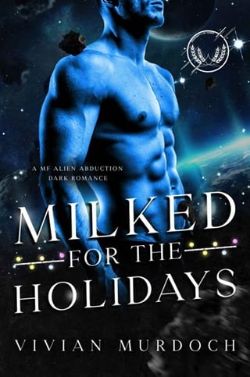
Vivian Murdoch's "Milked for the Holidays" is a provocative entry into the realm of dark romance, blending elements of science fiction with intense emotional and physical themes. This novel is not for the faint of heart, as it delves into the niche genre of HuCow romance, a subgenre that challenges conventional boundaries and explores the dynamics of power, submission, and desire. Murdoch's work stands out for its bold narrative choices and the way it intertwines alien encounters with deeply human emotions.
The story centers on a protagonist who finds herself unexpectedly whisked away to the alien world of Icora, where her body becomes the focal point of both exploitation and pleasure. The giant blue alien, who serves as both captor and caretaker, introduces her to a life that is both foreign and strangely alluring. The premise of being "milked" is not just a literal function within the story but also serves as a metaphor for the protagonist's gradual transformation and adaptation to her new reality. This transformation is central to the novel's exploration of identity and autonomy.
Murdoch's writing style is both vivid and immersive, drawing readers into the protagonist's internal conflict and the alien world's sensory experiences. The author skillfully balances the erotic with the emotional, ensuring that the narrative remains engaging without losing sight of the character's psychological journey. The prose is descriptive, often bordering on poetic, which adds a layer of depth to the otherwise stark and sometimes brutal setting. This style is reminiscent of authors like Tiffany Reisz, who also masterfully blend eroticism with emotional complexity.
Character development is a significant strength in "Milked for the Holidays." The protagonist's evolution from a woman yearning for companionship to someone grappling with her new identity is portrayed with nuance and sensitivity. Her initial resistance to her circumstances gradually gives way to a reluctant acceptance, and eventually, a complex desire that challenges her understanding of love and freedom. The alien character, while initially perceived as a mere antagonist, is revealed to have layers of complexity that add intrigue to their interactions. This dynamic is reminiscent of the nuanced relationships found in works like "The Claiming of Sleeping Beauty" by Anne Rice, where power and submission are explored in depth.
The major themes of the novel revolve around power dynamics, the search for love, and the struggle for autonomy. Murdoch does not shy away from depicting the protagonist's vulnerability, using it as a lens to explore deeper questions about consent and desire. The alien world of Icora serves as a backdrop for these explorations, its otherworldly nature amplifying the protagonist's sense of isolation and longing. The theme of being "milked" becomes a powerful symbol of both subjugation and liberation, challenging readers to reconsider preconceived notions of control and agency.
Emotionally, "Milked for the Holidays" is a rollercoaster, eliciting a range of responses from discomfort to empathy. Murdoch's ability to evoke such strong emotions is a testament to her skill as a storyteller. The protagonist's journey is one of both physical and emotional survival, and readers are invited to experience her highs and lows alongside her. This emotional depth is what sets the novel apart from more conventional romances, offering a raw and unfiltered look at the complexities of human (and alien) relationships.
In conclusion, "Milked for the Holidays" by Vivian Murdoch is a daring exploration of dark romance that pushes boundaries and challenges readers to engage with its provocative themes. The novel's blend of science fiction and eroticism, coupled with its rich character development and emotional intensity, makes it a compelling read for those willing to venture into its unconventional territory. While it may not appeal to all readers, those who appreciate bold storytelling and complex emotional landscapes will find much to admire in Murdoch's work. This book is a testament to the power of genre fiction to explore the depths of human experience, even when cloaked in the guise of alien worlds and extraordinary circumstances.



